


This post is part of my onlone book Linear Actuator Motion Control per CAN Bus.
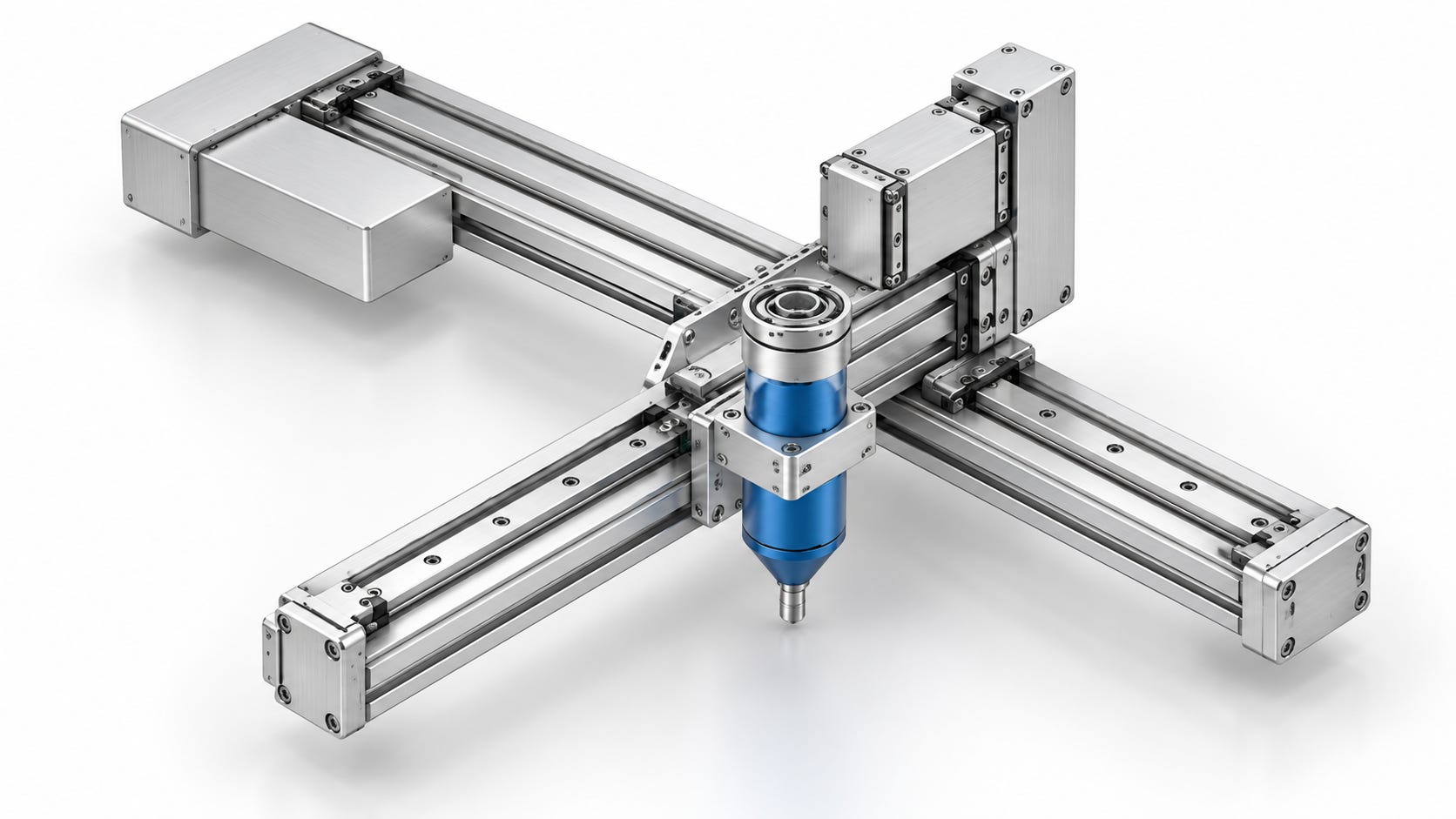
According to the Thomson website (see hyperlink below), the Electrak HD series combines electromechanical actuation with onboard electronics that can eliminate the need for standalone controls. Integrating control functions into the actuator can simplify the overall system and reduce the number of external components required. The exact benefits depend on the actuator configuration and the application’s control requirements.
With load capacities of up to 16 kN, the series expands the range of applications in which electric actuators can replace hydraulic motion systems. Electric actuation can eliminate the pumps, hoses, and hydraulic fluid associated with those systems. However, selecting a suitable replacement still requires consideration of stroke length, operating speed, duty cycle, and load characteristics.
Thomson also emphasizes the actuators’ suitability for demanding environments, citing environmental testing that includes IP69K. This rating addresses protection against high-pressure, high-temperature water jets, making it relevant to equipment exposed to intensive washdown procedures. Environmental protection remains one part of the selection process and should be evaluated alongside the product’s other operating specifications.
For embedded developers, the onboard electronics and available communication interfaces provide a practical foundation for programmable motion control. In this project, the SAE J1939 interface allows an external controller to send motion commands and receive actuator feedback over CAN Bus. The following application note examines the hardware, software, and practical considerations involved in implementing that control.
For more information on the Electrac HD actuator, see:
Electrak HD Linear Actuator | Thomson (thomsonlinear.com)
What is a Linear Actuator?

A linear actuator is a device that creates movement along a straight line. Unlike a rotary motor, which turns a shaft, a linear actuator extends or retracts to push, pull, lift, or position a load. Common applications include adjusting seats, opening ventilation panels, lifting equipment, and positioning machine components.
Linear actuators can be powered electrically, hydraulically, or pneumatically. Hydraulic actuators use pressurized fluid, while pneumatic actuators use compressed air. Electromechanical actuators, such as the Thomson Electrak HD, typically use an electric motor, gearing, and a screw mechanism to convert rotary motion into linear movement.
Selecting a linear actuator involves more than choosing its size. Important specifications include the force it can produce, its stroke length—the distance it can travel—and its operating speed. Other considerations include duty cycle, mounting arrangements, environmental protection, and whether the actuator must hold a load when power is removed. The actuator must match both the mechanical demands and the operating conditions of the application.
Control can range from simple switches that command extension and retraction to programmable systems that manage motion and monitor feedback. Actuators with integrated electronics may provide position information, operating status, and fault reporting. A communication interface such as CAN Bus allows an embedded controller to exchange commands and feedback with the actuator, supporting integration into a larger control system.
For more information, see:
Linear Actuator: What Is It? How Does It Work? Types Of (iqsdirectory.com)
Download the User Manual
Besides my application note, you will, of course, need to download the user manual, primarily for wiring and other information, which I will not address.
I will, however, repeat some information from the manual to provide a more comprehensible description regarding controlling the actuator. This involves primarily paragraph 5 (pages 23 through 26), which explains the SAE J1939 communication.
Download the user manual at:
Electrak HD Installation and Operation Manual (thomsonlinear.com)