


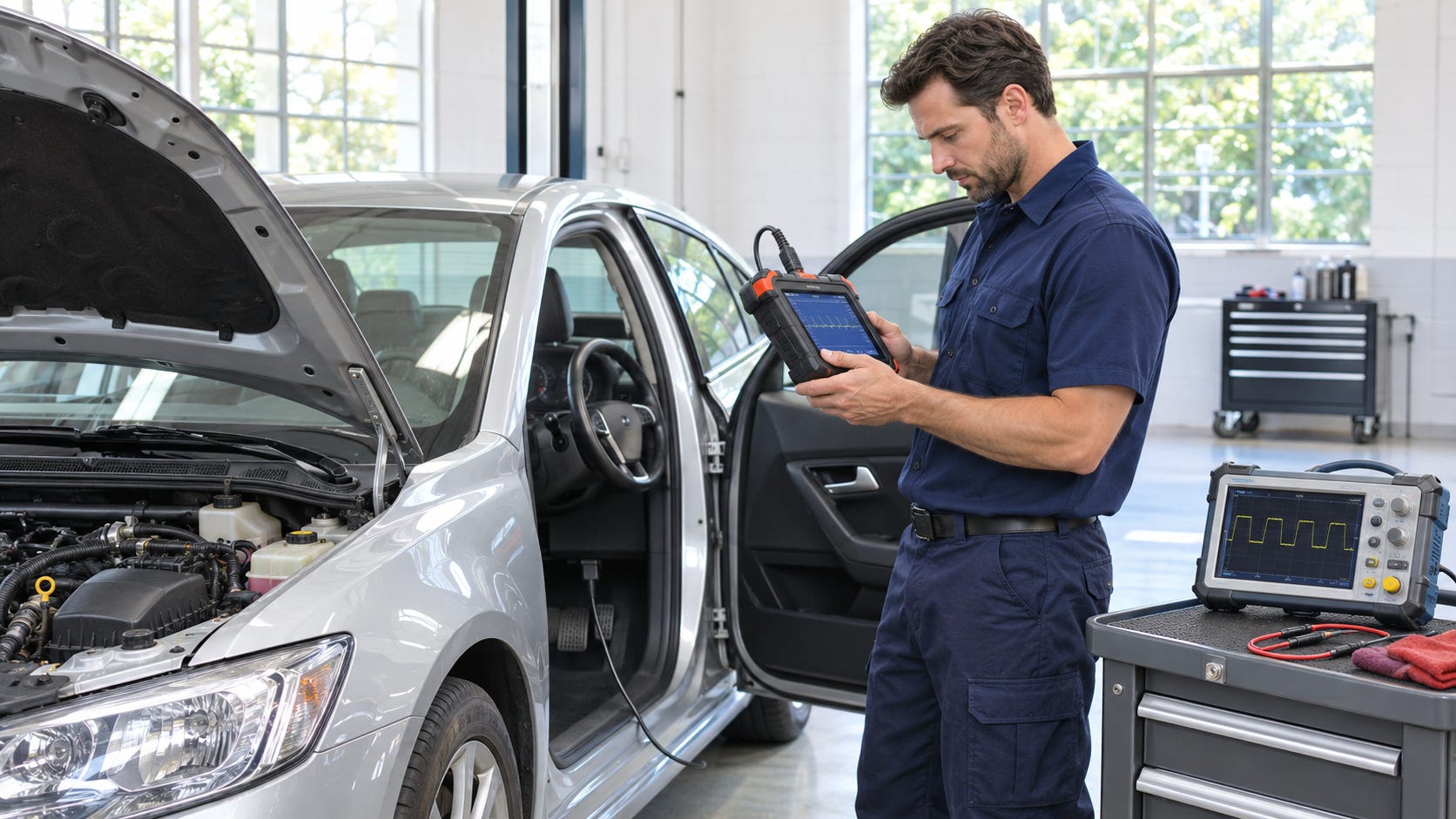
A vehicle comes into the workshop with an intermittent fault. The scan tool records a code, but the symptom disappears before the technician can reproduce it. Where do you start? A fault code can narrow the search, but choosing the next test takes an understanding of how the system works and what the results can tell you.

That connection between system knowledge and practical fault-finding is the focus of Advanced Automotive Fault Diagnosis. The fifth edition explains how vehicle systems and components operate, then shows how technicians apply diagnostic principles in the workshop. It includes 25 new real-world case studies that give readers a chance to follow the reasoning behind a diagnosis and consider what they would test next.
What’s new in the fifth edition?
The book expands its coverage of diagnostic tools and equipment, including VCDS, scan tools, pass-through interfaces, decade boxes, sensor simulators, and breakout boxes. It also updates its coverage of multimeters for high-voltage work.
Each tool answers a different kind of question. A scan tool can show what a control module is reporting. A multimeter can help establish what is happening at the circuit. A decade box lets a technician substitute a known resistance and observe how the system responds. The value of each test depends on the question the technician is trying to answer.
Who is it for?
The book is intended for students taking Level 3 and Level 4 vehicle diagnostics courses from IMI, City & Guilds, and BTEC, as well as those preparing for ASE, AUR, and other advanced qualifications. Definitions, key facts, and “Safety First” notes help readers connect the theory to workshop practice.
Experienced technicians can also use it as a reference when working with unfamiliar equipment or revisiting a diagnostic procedure. The case studies offer a practical way to use the book. Pause before the diagnosis is revealed, decide what you would test next, and ask yourself what result would make you change direction. More information…